HSCT for MS in Australia aHSCT risks, eligibility and access:
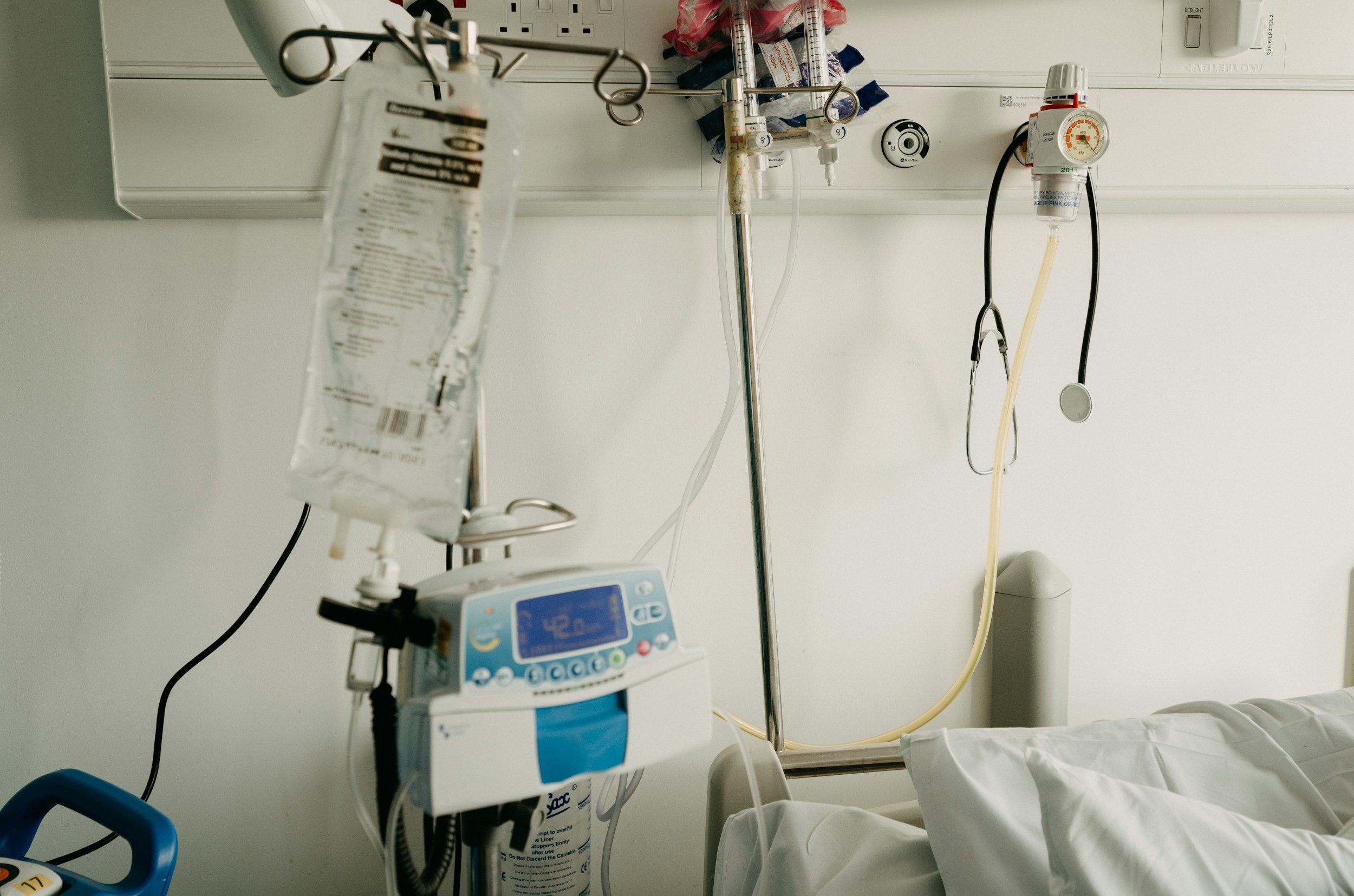
aHSCT for MS (sometimes called stem cell therapy or stem cell transplant for MS) in Australia sits in territory that most treatment conversations don't handle well. It's not a last resort. It's not a miracle cure. It's somewhere far more complicated than either of those descriptions - and if you're considering it, you probably already know that.
Autologous haematopoietic stem cell transplantation is an evidence-based treatment with genuinely compelling data behind it, a serious risk profile that deserves your full attention, and a recovery that will take more out of you - physically and emotionally - than most clinical brochures suggest.
I've been through it myself. I know what the clinical conversation covers, and I know what it tends to miss. This post covers the procedure, who qualifies under the criteria used by Australian transplant centres, where you can access it, what the outcomes data actually shows, and what recovery looks like once you leave hospital.
I'll also cover the part that most clinical conversations skip entirely: what this experience does to you emotionally, and why that matters as much as the haematological side.
Here's what you need to know before the referral conversation happens.
What aHSCT actually involves for MS patients
The core idea is a full immune system reset.
Your own stem cells are harvested and stored. High-dose chemotherapy destroys the faulty immune system that has been attacking the myelin sheath around your nerves. Then your stored stem cells are reinfused to rebuild a new immune response from scratch.
The treatment targets active inflammatory disease. It does not repair existing nerve damage. That distinction matters - a lot - before you ever request a referral.
The procedure moves through four distinct stages:
Mobilisation: Growth factor injections stimulate stem cell production, and those cells are collected from your blood.
Conditioning: The chemotherapy phase - typically using BEAM or cyclophosphamide-based regimens - wipes out your existing immune system.
The transplant: Your stored stem cells are reinfused (the simplest part of it all - surprisingly anticlimactic!)
Engraftment: Roughly 10 to 14 days isolated in a haematology or transplant unit - not a neurology ward - while your new immune system begins to reconstitute.
The entire inpatient stay runs approximately three to four weeks, followed by weeks of close outpatient monitoring.
If your MS has left lasting disability from nerve damage, this procedure is unlikely to recover it. What it aims to do is stop the inflammatory attack before more damage occurs. Getting that expectation clear from the start isn't pessimism - it's the foundation of an informed decision.
Who qualifies: aHSCT eligibility in Australia
Australian transplant centres apply consistent, specific criteria, though exact thresholds vary between centres and clinical trials.
The typical candidate has highly active relapsing-remitting MS, a disease duration of under 10 years, and documented failure or intolerance of at least one high-efficacy disease-modifying therapy (DMT).
EDSS thresholds differ across sites. Many Australian protocols use a ceiling of 5.5, while some centres accept scores up to 6 or 6.5 in specific clinical circumstances. Age eligibility commonly runs from 18 to 55, though some trial protocols extend to 65.
Patients with primary progressive MS are generally excluded unless there is clear evidence of active inflammatory lesions on imaging.
"Highly active" disease is not a subjective feeling. It means documentable clinical and radiological evidence: two or more relapses in the preceding year despite treatment, new gadolinium-enhancing lesions on recent MRI, or severe relapses with incomplete recovery. Your neurologist needs this in your clinical record. If it isn't there, even a genuinely motivated patient may not clear the assessment process.
The factors that rule out eligibility are equally concrete: uncontrolled psychiatric illness, significant organ impairment (cardiac, pulmonary, hepatic), active infection, and pregnancy all preclude treatment. Patients who meet most criteria may still be declined after multidisciplinary team assessment. That's not a failure of the system - that's the system doing exactly what it should.
The risks of aHSCT are real. The selection process exists to protect you. This might help for emotions that crop up during the whole process: Where to Find Emotional Support After an MS Diagnosis in Australia
Accessing aHSCT for MS in Australia
There are currently four treatment centres offering aHSCT for MS in Australia:
St Vincent's Hospital, Sydney
Royal North Shore Hospital, Sydney
Austin Health, Melbourne
The Alfred, Melbourne
Each delivers the treatment through observational clinical trials or dedicated funded programs, with patients contributing data to the Australian MS aHSCT Registry as part of the treatment pathway. The Austin Health trial, led by Professor Richard MacDonell (contact 03 9496 3705), is listed as actively recruiting. For an overview of aHSCT services and pathways in Australia, MS Australia's aHSCT information is a useful starting point.
The referral pathway involves multiple steps, but it's workable. Your treating neurologist identifies you as a potential candidate and submits a referral with your full clinical history and recent MRI results. That goes to a neurology and MS multidisciplinary team, then to a transplant haematologist, and finally to a bone marrow transplant MDT for final approval and scheduling.
If you're already a patient within the St Vincent's Health Network or Northern Sydney Local Health District, a more direct pathway to the neurology MDT may be available. Clinical guidance on transplant protocols and local best practice is summarised in the NSW ACI clinical guideline for aHSCT in MS (PDF).
The most practical thing you can do at your next neurology appointment is ask directly:
Does my current disease activity and treatment history make me a potential candidate?
Which of the four centres would be appropriate given my location and clinical profile?
What documentation do you need to prepare a referral?
Those questions put the conversation in motion without waiting for your neurologist to raise it first.
What the evidence shows: outcomes and the real risks
The efficacy data for aHSCT in MS is genuinely impressive, particularly for patients with highly active relapsing disease.
Australian cohorts show relapse-free survival rates of approximately 77 to 88% at two to four years, and 65 to 73% of patients maintaining no evidence of disease activity at five to ten years. Published comparative analyses show aHSCT performing favourably relative to alemtuzumab (Lemtrada) - itself a high-efficacy treatment - with ARR ratios in some studies sitting around 0.26. For a detailed review of outcomes in recent literature, see this open-access systematic review and meta-analysis of aHSCT efficacy and safety.
For patients whose MS has been running hot despite medication, those numbers represent a meaningful change in trajectory. Ask your neurologist to walk you through the Australian registry data relevant to your specific profile.
The risks deserve the same attention as the benefits.
Treatment-related mortality in modern cohorts ranges from approximately 0.3% to 1% - down significantly from rates of 3% to 4% seen two decades ago. The primary causes of serious harm are infection during the neutropenic period, viral reactivations including shingles and herpes, and acute organ stress from high-dose chemotherapy.
Long-term risks include lowered fertility or early menopause, a roughly 2% risk of secondary autoimmune conditions (particularly thyroid-related), a small risk of secondary malignancy, and near-universal hair loss and severe fatigue in the short term.
On disability progression: while aHSCT outperforms alemtuzumab on inflammatory endpoints, disability progression rates are comparable between the two. aHSCT does not automatically mean walking better or thinking more clearly. For patients with long-standing disability, the primary benefit is halting further damage, not recovering what's already been lost.
That framing isn't discouraging. It's the honest picture that allows you to make a decision you can actually stand behind.
The recovery timeline: what nobody fully prepares you for
The inpatient stay is one chapter. The weeks that follow at home - still profoundly immunocompromised - are another one entirely.
Most people describe extreme fatigue, hair loss, dietary restrictions, real vulnerability to infection, and an uneven, slow return of energy over roughly three to six months. MS symptoms may temporarily worsen during this period before stabilising. Knowing this in advance - really knowing it, not just reading it on a page - makes an enormous practical difference to how you arrange your life around treatment.
The emotional side is the part that clinical settings rarely have time for.
I had my aHSCT at Royal North Shore Hospital three years ago, as part of the trial that has since received government funding. I know what it feels like in the conditioning phase when the chemotherapy hits. I know the strange disorientation of the engraftment period - that suspended, unreal stretch of days alone in a haematology ward that is nothing like a neurology ward. I know the complicated mixture of hope and terror during the monitoring phase, and the grief that surfaces when recovery is slower than you expected.
None of that is unusual. All of it is a normal response to a profoundly abnormal experience.
Clinically, anxiety tends to increase in the early post-transplant phase. Depression and fatigue can persist even when physical outcomes are positive. Many patients find that psychological support was completely absent from their treatment pathway - not because their team didn't care, but because transplant teams are focused, understandably, on haematological outcomes. I know all I got was 2× 1 hour visits from the hospital social worker.
I work with MS patients through this process: before treatment begins, during it, and through the long months of recovery on the other side.
Questions to bring to your neurology appointment
Going into a neurology appointment without specific questions is one of the easiest ways to leave without the information you need.
If you're considering aHSCT, bring these:
Does my MRI activity and relapse history suggest I meet current eligibility criteria?
Have I failed or been unable to tolerate the high-efficacy DMTs typically required before aHSCT is considered?
Which centre would you refer me to, and what documentation do you need to initiate that referral?
Fertility preservation warrants a direct, separate question. If you plan to have children, ovarian tissue cryopreservation is the primary recommended strategy before chemotherapy conditioning - aHSCT cannot be delayed for a full stimulation cycle. Your neurologist and a reproductive endocrinologist should both be part of that conversation before you commit to a start date. For current clinical guidance on fertility preservation before gonadotoxic treatment, see the ASRM committee opinion on fertility preservation in patients with medical indications.
Also ask what conditioning regimen the treating centre uses, what the post-discharge monitoring schedule looks like, and under what circumstances the MDT would recommend against proceeding.
Informed consent here is not a form to sign. It's a genuine, extended conversation.
And ask this - because most people don't: What support is available for the emotional side of this process?
Most transplant teams focus on haematological outcomes. That's their job, and they do it well. But psychological preparation and recovery matter just as much, and they're far less likely to be offered unless you ask.
Making a decision you can stand behind
aHSCT for MS in Australia is a legitimate, evidence-based treatment pathway for a specific group of patients with highly active relapsing disease. It is not without serious risk, and the process of accessing it is genuinely complex.
For those who meet the criteria, the outcomes data is compelling, and the treatment centres doing this work are experienced. The most important first step is an honest conversation with a neurologist who has your clinical history and MRI evidence in front of them.
What no article can do - including this one - is prepare you for what it actually feels like. The medical pathway is only part of the picture. The emotional preparation, the fear during treatment, the complicated recovery on the other side - these deserve the same quality of support as the haematological side.
If you're considering aHSCT, already in the process, or in recovery and finding it harder than you expected - I'd love to hear from you. An initial consultation with me is $79, no GP referral needed, and available online across Australia.
You don't have to figure this out alone.
What nobody warns you about: the emotional side of HSCT
Most of the information available about HSCT focuses on what I'd call the external arc — whether you're eligible, what the procedure involves, what the data says about outcomes. That's important. But there's another arc that gets far less attention, and it's the one that catches most people off guard.
Before HSCT: the weight of the decision
For many people, the decision to pursue HSCT is one of the hardest they'll make. The stakes feel enormous — it's not a minor treatment adjustment, it's an aggressive intervention with real risks — and the people around you may have strong opinions in every direction. You can be fully informed about the medical picture and still feel entirely alone in working out what to do with the uncertainty of it.
The waiting is its own kind of difficult. Between the decision and the procedure, time moves strangely. You're living in an in-between state — not sick enough that HSCT feels obviously necessary to everyone around you, but frightened enough that the waiting feels unbearable. That's a hard place to be, and it's one most people navigate without much support specifically for it.
During recovery: identity limbo
HSCT recovery is often described in physical terms — the timeline, what to expect, when you'll start feeling like yourself again. What it rarely describes is the identity shift that happens in the middle of it.
You've made a major, irreversible decision. You're in the thick of the physical recovery. And somewhere in there, often quietly, the question surfaces: who am I on the other side of this? The version of me who had MS and was managing it — what happens to her? Even when HSCT works well, the person who comes out the other side has been through something significant, and that takes time to integrate.
After HSCT: the grief nobody expects
Here's something I hear often from people after HSCT, including in my own experience: it's possible to grieve even when it works.
When HSCT goes well — when the disease stabilises, when you get the outcome you were hoping for — there's sometimes an expectation that relief should be the dominant feeling. And often it is, for a while. But it can sit alongside grief for everything the disease took before the treatment, guilt that you got access when others couldn't, and a strange disorientation when the thing you were fighting for finally arrives and you don't know who you are without that fight.
None of that is ingratitude. It's a completely normal response to an abnormal situation.
What support looks like at each stage
MS-informed counselling can help at any point in the HSCT process — before the decision, during the wait, through recovery, or long after the dust has settled and you're still trying to work out what it all meant.
It's not about having answers. It's about having somewhere to take the parts of this that don't fit in a neurology appointment — the fear, the grief, the identity questions, the exhaustion of carrying it largely alone. With nearly 20 years of MS myself, I understand the emotional texture of this from the inside, not just clinically.
If you're anywhere in the HSCT process and the emotional side of it feels unaddressed, the Initial Consultation is a good place to start. It's $79, 40 minutes online, and no referral is needed.
References: